
Choosing the right cooling system is one of the most important decisions you can make for your home’s comfort. Both ductless mini-split systems and central air conditioning offer reliable cooling, but the best option depends on your home’s layout, existing infrastructure, and specific comfort needs. Understanding the pros and cons of ductless systems can help you make an informed choice for 2026 and beyond. Each system has unique advantages, and selecting the right one ensures efficient operation, consistent temperatures, and long-term performance.
What Should You Know Before a Central Air Conditioning Replacement?
A central air conditioning replacement works best when the new system matches your home’s size, ductwork, and cooling needs. Replacing an outdated unit can improve energy efficiency, provide more consistent temperatures, and reduce repair costs over time. Professional sizing and installation also help maximize long-term performance and indoor comfort.
When Central AC Is the Better Choice for Whole-Home Cooling
A central air conditioner is the most common air conditioning system for whole-home cooling, using ducts and vents to deliver conditioned air throughout the house. It delivers conditioned air evenly to multiple rooms using a single thermostat and air handler. For homes that already have properly installed ducts, central AC provides a convenient and effective whole-home solution, but if a home does not have existing duct work, installation is usually more expensive because renovations may be needed.
This system is ideal for maintaining consistent temperatures throughout larger spaces. With one centralized unit, homeowners can manage comfort with a single control point. Central AC also works well when the goal is uniform cooling across all rooms rather than individual temperature zones.
The right new ac unit size should match the home’s square footage and cooling load, which can be estimated with a BTU calculator. A proper evaluation should also include a Manual J load calculation that reviews insulation, window types, and sun exposure so different system types are sized correctly. An oversized current unit or replacement air conditioner can cool too quickly and leave excess humidity behind.
Properly maintained ductwork plays an important role in system performance. Clean, sealed ducts allow air to move efficiently and help the system operate as intended. In Central Florida, high humidity makes it especially important to choose an ac unit with strong moisture removal. Variable-speed equipment can use less energy while helping keep indoor humidity below 55%. If you are replacing a central AC setup, replacing the air handler and outdoor unit together will usually deliver the best efficiency and compatibility with the rest of the system.
When a Ductless Mini-Split Is the Smarter Option for Your Space
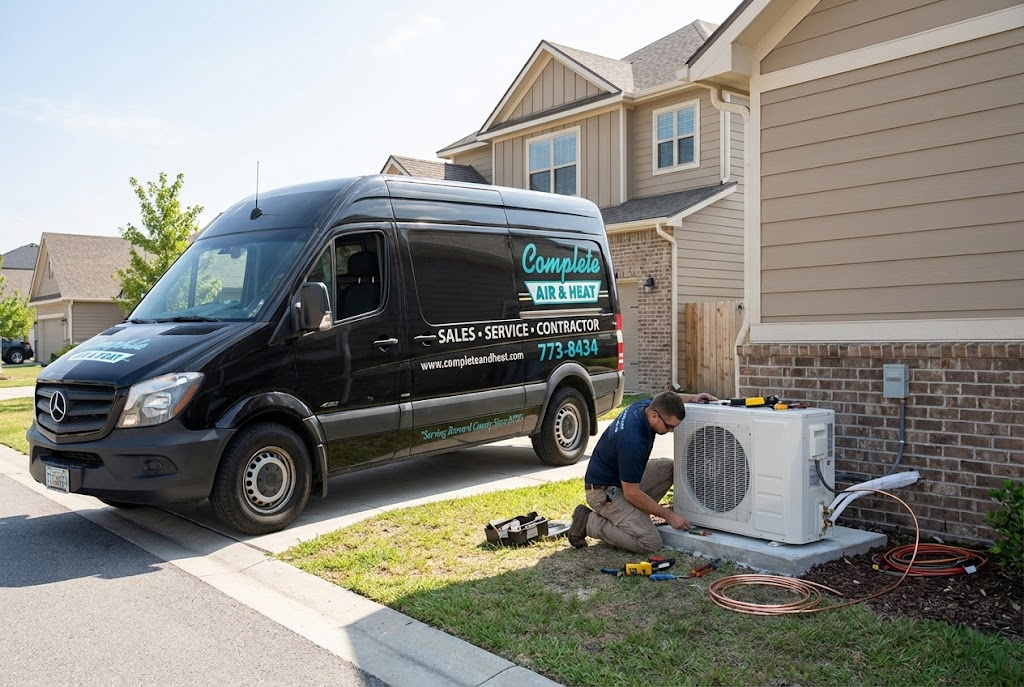
Ductless mini-split systems offer a flexible alternative among different system types for homes without existing ductwork or for areas where extending ducts isn’t practical. These systems use individual indoor units connected to an outdoor condenser, allowing for zoned cooling in specific rooms through efficient ductless mini-split cooling systems.
Unlike window units, which can cool a single room and are affordable but generally less energy efficient, mini-splits are typically a better long-term fit for targeted comfort.
Mini-splits are especially useful when a new air conditioner is needed for additions, converted spaces, or rooms that tend to stay warmer than the rest of the home. Because each indoor unit operates independently, you can adjust temperatures based on how each space is used.
Another advantage is the ability to avoid duct-related energy losses. With no ducts required, cooled air is delivered directly into the room, making mini-splits energy efficient because they often use less power by avoiding duct losses.
Comparing Energy Efficiency, Comfort, and Installation Costs
Central AC provides consistent, whole-home cooling with a single system, making it a strong choice for homes designed around ducted airflow. Ductless systems, on the other hand, allow for targeted comfort and individualized temperature control. A new system can also improve comfort through better energy efficiency and lower energy bills.
Efficiency depends on how the system matches the home. A central system paired with well-maintained ductwork can operate efficiently. A ductless system can be equally efficient when used to cool specific zones without conditioning unused areas.
Higher-efficiency hvac units may have a higher upfront cost, but they can save money in the long run.
A modern air conditioner may also improve indoor air quality by filtering dust, pollen, and other allergens. Some models also include programmable thermostats for better temperature control and energy management.
The key is selecting a system that aligns with your home’s layout and cooling priorities while balancing maintenance, efficiency, and cost to fit your budget.
How to Choose Between a Mini-Split and Central AC in 2026
The decision between ductless mini-splits and central AC depends on your home’s structure, how you use each space, and whether to repair or replace an aging old unit based on air conditioning costs, installation costs, and the home’s layout. Homes with existing ductwork often benefit from central AC, while homes without ducts—or those needing targeted cooling—may find ductless systems more practical. Some homeowners also compare central AC with a heat pump when choosing a new air conditioning system because it can provide both cooling and heating.
In Florida, a new unit for a full central air conditioner replacement typically ranges from $3,906 to $8,018, depending on home size, brand, efficiency, and the overall process. Labor is often 30% to 50% of the total cost, or about $1,200 to $4,000 or more depending on system type and installation complexity. Permit fees are also common, typically ranging from $100 to $500 in Florida, and can include a post-installation inspection. In Orlando, full AC changeouts require building permits and a final inspection for compliance.
A professional evaluation, not DIY hvac repair, helps determine which option will deliver the best performance and long-term comfort. Factors such as square footage, insulation, room usage, and technician access all play a role in selecting the right ac system. Electrical or plumbing upgrades, refrigerant lines, and inspection and sealing of all accessible duct joints and seams during replacement can all raise total costs. Florida code also sets efficiency and heating rules, including a 14.3 SEER2 minimum for newly installed residential split systems, and conventional electric resistance heat strips cannot serve as the primary heating source in total central equipment replacements. For central florida homes, a seer rating of 15 to 16 is often recommended, and strong moisture control matters in long cooling seasons. Regular maintenance helps maintain performance and can extend the lifespan of a new air conditioning system. Systems with ENERGY STAR certification are designed to reduce energy usage and may qualify for utility rebates or tax credits, along with flexible financing options. High-efficiency systems may also qualify for local utility rebates and federal energy-efficiency tax credits. Choose a professional installation from a trusted company whose technicians have experience installing equipment so it is installed correctly and can handle refrigerant updates such as R-454B, an eco-friendly alternative to phased-out R-410A.
Contact Complete Air & Heat, Inc. today to explore your cooling options and schedule a consultation. Making families happy on the Space Coast since 1975.